
Helping Children Learn to Think, Not Just Memorise
Across the world, children are taught what to learn - but not how to think. Many can memorise procedures yet freeze when a question looks different. At Neuromath, we believe real learning begins in the mind, not in the textbook. Our approach develops the brain's learning system - helping children process, relate, and reason with clarity. When children are trained to think first, understanding becomes natural - and confidence follows.
Why Neuromath Exists
Every parent wants their child to succeed. Yet many students struggle not because they lack ability, but because they were never trained to think. Schools focus on completing the syllabus. Teachers race against time. Parents add extra practice at home. But true mastery depends on something deeper, the brain's ability to process, connect, and reason. Neuromath was founded to close this gap.
Since 2001, we've built Singapore's first Math Talent Development Hub, equipping children with a complete Thinking Operating System - training focus, logic, visual reasoning, and problem-solving confidence. For parents, this means fewer homework battles and less stress at home. For educators, it's a proven framework that moves students beyond memorisation to mastery. And for schools, it marks a shift toward nurturing thinkers ready for the future.
Our Impact So Far
What We Do
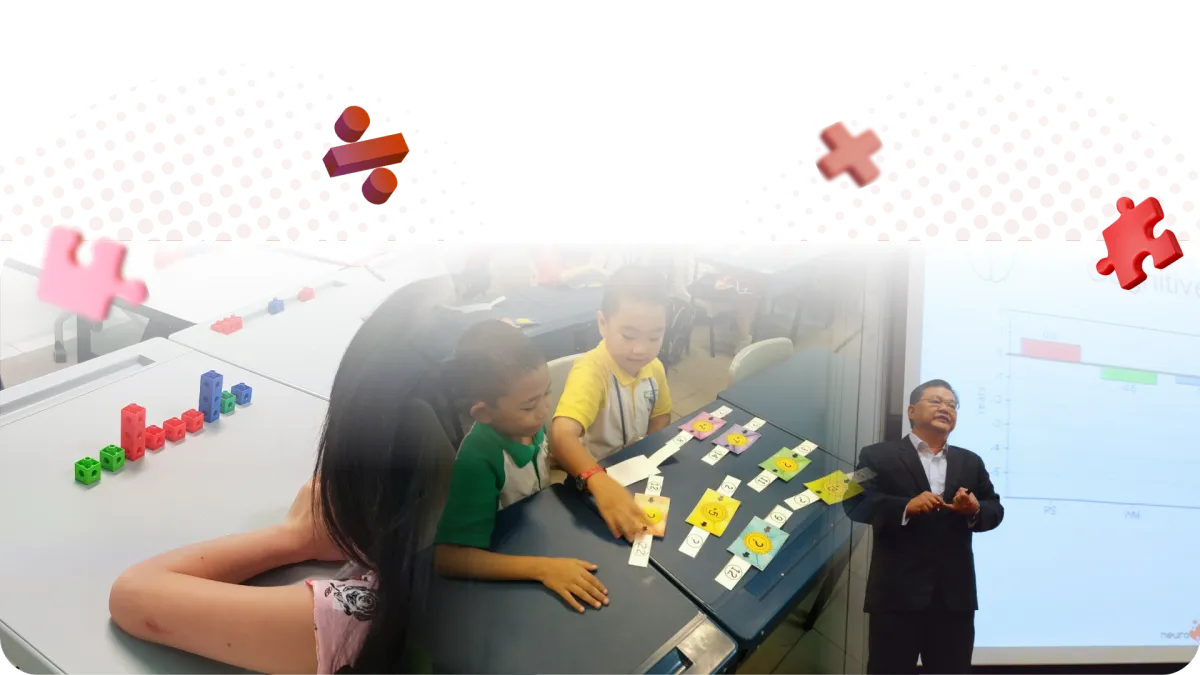
We empower schools, educators, and entrepreneurs with a structured, neuroscience-based system to nurture critical and inventive thinkers. Our approach combines cognitive psychology, brain-based pedagogy, and purposeful play turning classrooms and learning spaces into environments where children learn how to think, not just what to do.
Every partnership with Neuromath brings the same mission to life: "Building Thinkers. Creating Futures."
How We're Different
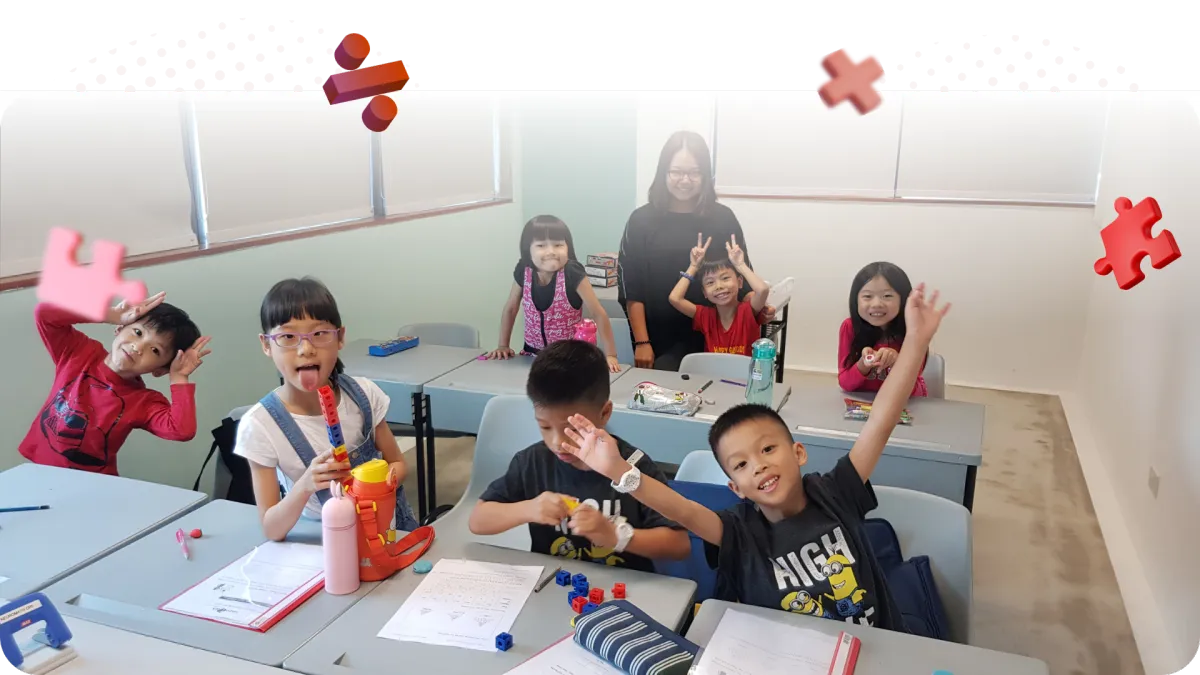
Neuromath doesn't teach formulas, we train the mind that understands them. While others focus on repetitive practice, we build the mental architecture for comprehension. Through our CPA approach (Concrete-Pictorial-Abstract) and manipulative-based learning, children engage in purposeful play, visualise relationships, and develop flexible problem-solving strategies that prepare them not just for exams - but for life.
What We Stand For
These principles shape everything we do in classrooms, in teacher training,
and in every Neuromath community hub.
Thinking before
answering
Understanding before memorising
Joyful learning
over stress
Confidence
through clarity
Vision
Building Thinkers.
Creating Futures.
Mission
To redefine math learning by developing every child's ability to think critically, reason logically, and solve creatively - preparing them to thrive in tomorrow's world.
The 3C Framework
The 3Cs Framework forms the foundation of Neuromath's Thinking Operating System. Each stage builds on the previous one, developing adaptable thinkers who can see relationships, spot patterns, and reason through complexity.
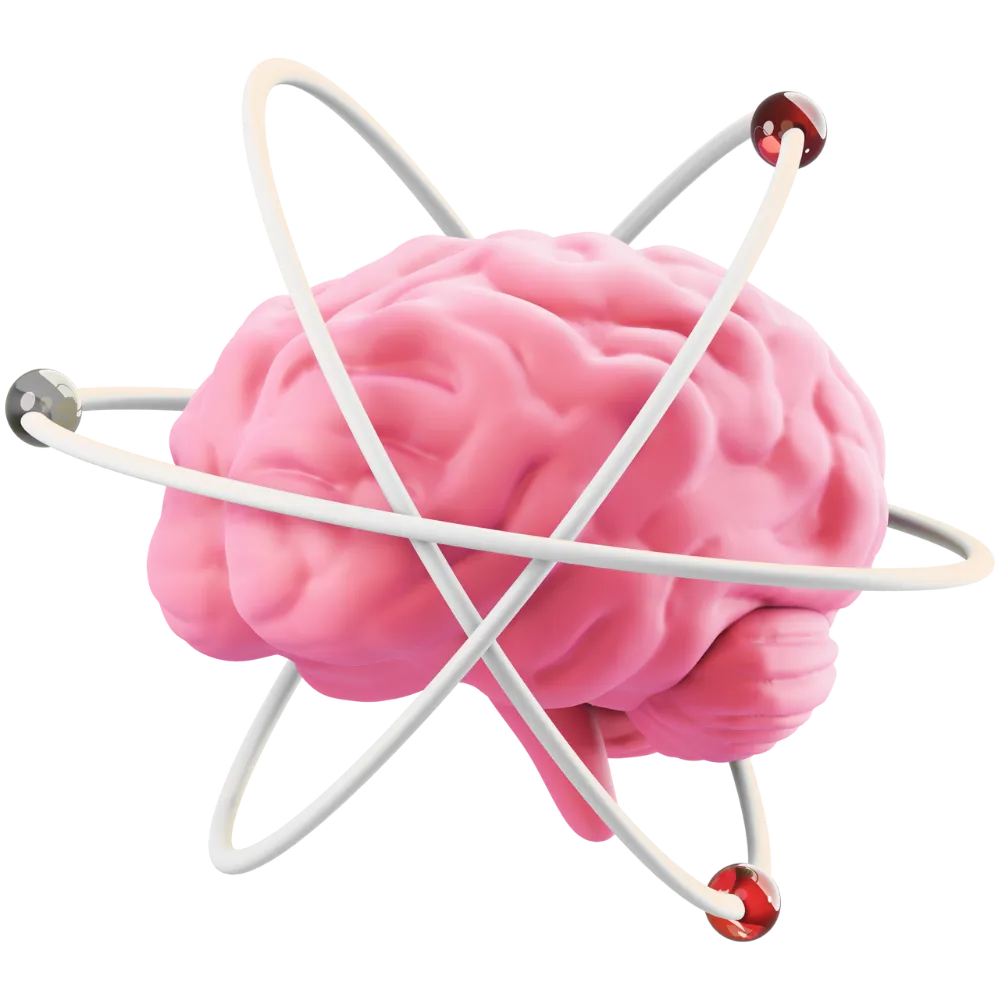

Cognition
Builds attention, logic, and focus through structured brain training
and purposeful play.
Competency
Strengthens reasoning and pattern
fluency through whole-brain
analytical training.

Concept
Connects thinking strategies directly to school math, exams & competitions - building confidence and fluency under pressure.
The Neuromath Thinking Operating System
Every computer runs on an operating system. The brain works the same way.
It needs a set of processes that manage how information is received, processed, and applied.
Neuromath's Thinking Operating System builds those processes through structured cognitive development:

Training how children see patterns, relationships, and structures

Guiding how they ask
questions and analyse problems
Strengthening how they think and
process logic
Helping them decide and apply what they
know flexibly
The Brains Behind Neuromath
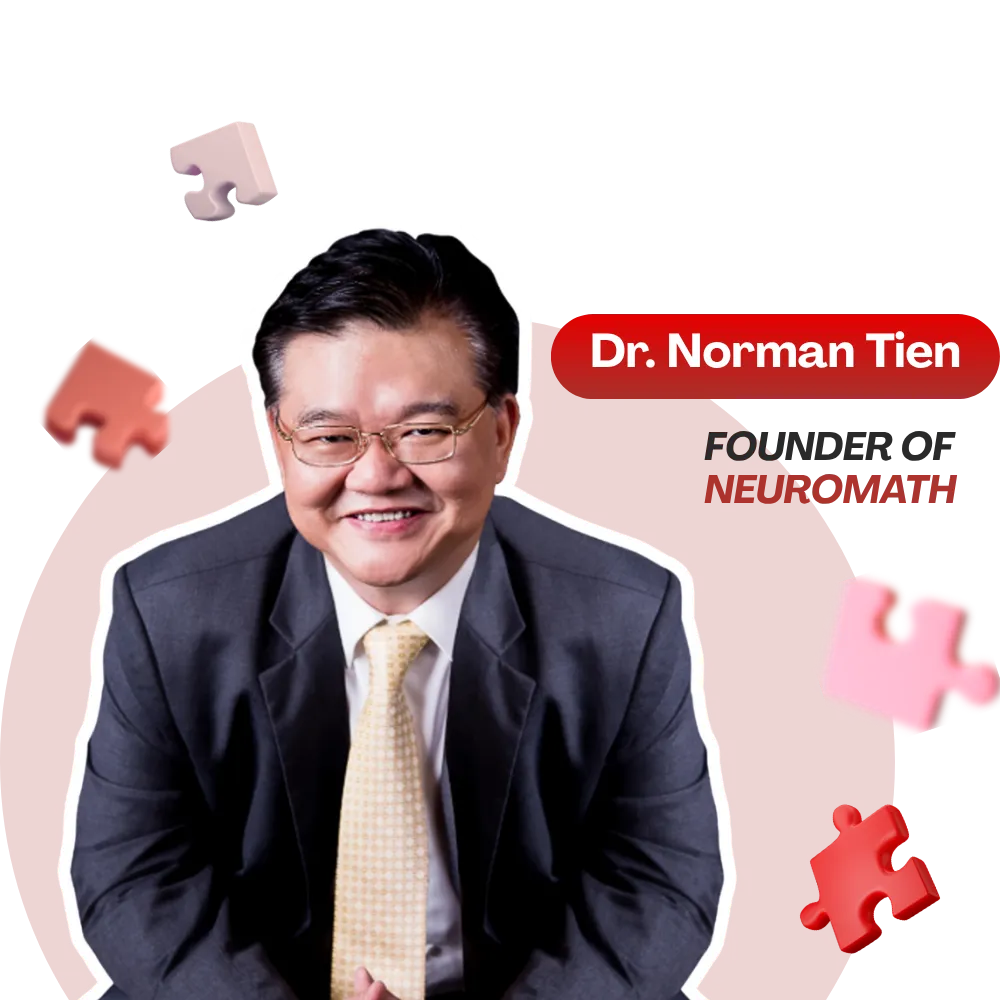
Norman Tien
Founder of Neuromath
Norman Tien, widely known as The Math Talent Architect, is a pioneer in cognitive-based math education and the creator of the Pattern Thinking approach a method that has transformed over 10,000 struggling learners into confident achievers and A scorers. Holding a Doctorate of Science in Cognitive Psychology, Norman bridges brain research with classroom practice. A practitioner first, he works hands-on with students, parents, and educators to prove that math success is not about memorisation but mastery of thought. Over two decades, his innovative Thinking-First model has shaped how educators across Asia train focus, logic, reasoning, and flexible problem-solving. Recognised as a thought leader and speaker in education innovation, Norman continues to guide Neuromath's mission: To build thinkers, creators, and future-ready learners across the world.
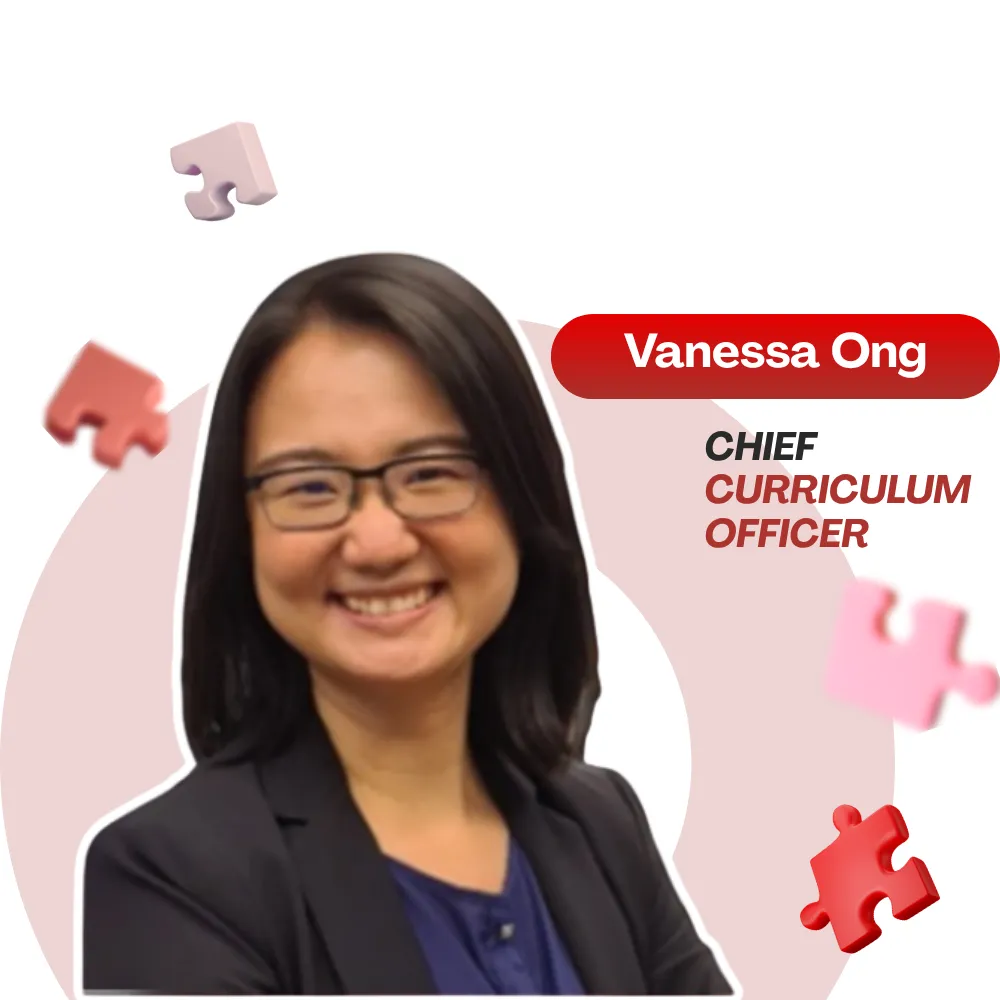
Vanessa Ong
Chief Curriculum Officer
Vanessa Ong holds a Bachelor of Psychology (Hons) and has spent over 16 years working alongside Norman Tien, mastering the science of how children think and learn. As a curriculum innovator, she bridges cognitive psychology and practical classroom application-transforming complex theories into tangible, engaging learning experiences for children. Her deep understanding of how the brain processes math has shaped Neuromath's Thinking OS into a structured yet joyful system that nurtures focus, reasoning, and creativity. Under her leadership, Neuromath's programmes have become models of how play, logic, and problem-solving co-exist to build confident, independent learners. Passionate about empowering teachers, Vanessa also leads the development of training frameworks that help educators deliver thinking-based learning with impact - ensuring that every child not only learns better but loves learning more.
Our Impact So Far
10,000+
students
transformed
500+
educators
trained
20+
years of
development
97%
Trusted by schools across Southeast Asia
Neuromath
Unlock New Possibilities for Your Students with Neuromath.
Together, we can build future-ready classrooms filled with confidence, curiosity, and independence.
Our Location
1 Paya Lebar Link
Singapore 408533
+6596230836


